
India’s Next Strategic Edge Will Depend on Energy, Defence and Technology Self-Reliance
At the Morningstar Investment Conference India 2026, the former Ambassador to the US highlights supply-chain diversification, domestic production and strategic autonomy as critical priorities for India
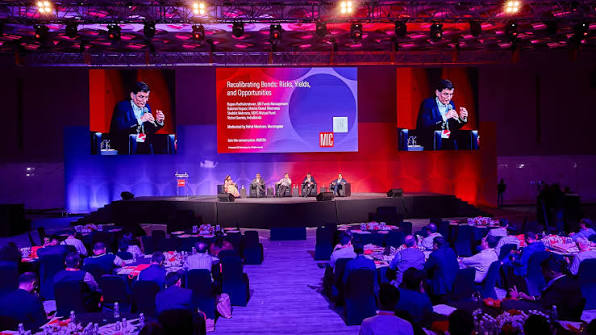
Mumbai, September 30, 2026: India’s ability to navigate an increasingly fragmented global order will depend not only on how it manages relationships with major powers, but also on how quickly it builds greater resilience in energy, defence, technology and domestic production, said Navtej Sarna, former Ambassador of India to the United States and author, during a fireside chat at the Morningstar Investment Conference India 2026 in Mumbai.

In the session, titled ‘The World in Disarray: India’s Priorities and Challenges’, Sarna said the global environment is moving from a relatively predictable international order towards one defined by conflict, rivalry and competition, with tariffs, sanctions and disruptions to global supply chains becoming increasingly consequential for economies and investors. For India, he said, this makes strategic autonomy — building different relationships with different powers while keeping national interests at the centre — increasingly important.
A key vulnerability, according to Sarna, is India’s dependence on imported energy. He pointed to the country’s reliance on imports across crude oil, LNG and LPG, while noting that even parts of India’s renewable-energy ecosystem, including silicon wafers, remain dependent on imports from China. The disruption around the Strait of Hormuz and other maritime choke points, he said, has brought energy-route security into sharper focus.
“Unless we can manage to find new sources, energy is going to be a restraint on everything that we try to do,” Sarna said, underlining the need to diversify energy sources and strengthen domestic capabilities.
The conversation also examined the limits of the China-plus-one opportunity. While India has benefited from supply-chain diversification, Sarna cautioned against viewing the country as the sole alternative to China. He pointed to growing competition from Southeast Asia and Mexico, while noting that several Indian inputs continue to originate in China. He stressed the need to diversify these supply chains and step up domestic production, without which India’s manufacturing ability could hit a ceiling.
Defence presents a similar transition. Sarna noted that India has diversified its defence sourcing beyond Russia towards the United States, Israel and France, while local production and co-production capabilities have begun to develop. However, he emphasised that moving towards greater domestic capability will require technology sharing, foreign investment and international partnerships.
Technology, meanwhile, is emerging as another strategic fault line. Sarna described India as operating between two competing technology paradigms — those centred around China and the United States — making technology access, domestic capabilities and diversified partnerships increasingly important to India’s economic and strategic resilience.
For investors, Sarna’s message was ultimately about looking beyond immediate geopolitical headlines and understanding the structural shifts they are creating across industries, supply chains and capital allocation. As India seeks to diversify its external relationships, the ability to build domestic capacity while broadening its network of economic, technology and defence partnerships could become central to its resilience in a more uncertain world.
(Disclaimer: The information provided here is investment advice only. Investing in the markets is subject to risks and please consult your advisor before investing)
(સ્પષ્ટતા: અત્રેથી આપવામાં આવતી તમામ પ્રકારની માહિતી કોઇપણ પ્રકારે રોકાણ/ ટ્રેડીંગ માટેની સલાહ નથી. બજારોમાં રોકાણ જોખમોને આધીન છે અને રોકાણ કરતા પહેલા કૃપા કરીને તમારા સલાહકારની સલાહ લો. વધુમાં અત્રે પ્રગટ થયેલા કોઇપણ સમાચાર કે વિગતો સાથે businessgujarat.in અંશતઃ કે સંપુર્સણપણે સહમત નથી.)