
90% of Women Leading Family Wealth Decisions Are Still Learning: Equirus Wealth Study


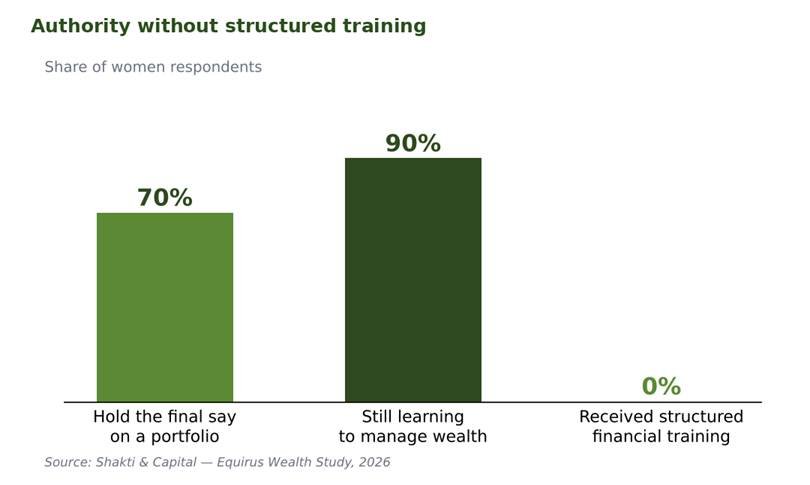
Despite 70% holding final say on portfolios, none of the respondents received structured financial training, exposing a critical gap in wealth succession; 40% assumed wealth responsibility following a major life event
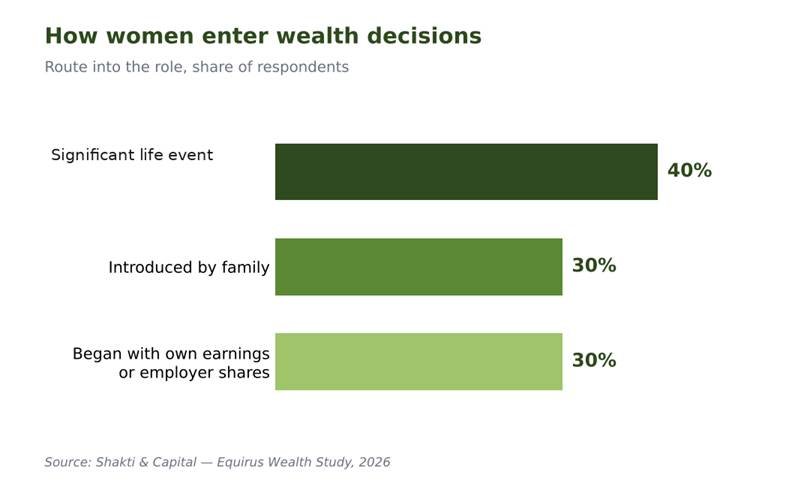
Mumbai, 13 October 2026: Four in ten women interviewed by Equirus Wealth assumed responsibility for wealth decisions following a significant life event, including bereavement, separation, capital loss or inheritance, rather than through a planned introduction to family finances. The finding highlights a key challenge in Indian family wealth management: financial responsibility can arrive before individuals have acquired the knowledge and experience needed to exercise it confidently.
The finding is part of Shakti & Capital: Next-Generation Women and the Future of Indian Family Wealth, a qualitative study conducted by Equirus Wealth through in-depth conversations with women investors and inheritors served by Equirus Family Office. While 40% of respondents entered wealth decision-making following a significant life event, only 30% were introduced to these responsibilities by family members. Another 30% began their investment journey through their own earnings or employer shares.
The study also offers an important insight into how respondents define the purpose of wealth. For 50%, financial independence and peace of mind are the primary objectives, reflecting a desire for security, personal choice and the freedom to pursue life on their own terms. Another 30% view wealth primarily as a platform for the next generation to build upon, while 20% identify giving as its principal purpose.
Despite significant decision-making responsibilities, financial education remains largely experiential. While 70% of respondents report having the final say over a portfolio, 90% acknowledge that they are still learning. The findings point to a gap between the authority women exercise and the structured financial training available to support them.
Released on the occasion of Navratri, a festival celebrating the divine feminine and the many forms of Shakti, the study underscores the importance of empowering women not only with ownership of wealth, but also with the knowledge, confidence and authority to shape its future.
Commenting on the study, Nitesh Arora, Managing Partner – Equirus Family Office, said:
“Approximately ₹73 lakh crore could pass to women in Indian families over the next decade. But the larger question is whether the knowledge and decision-making capability needed to manage this wealth will pass on with it. Families devote considerable attention to building and preserving wealth, but preparing the next generation to manage it deserves equal attention. The real measure of a successful wealth transition is not simply how much capital changes hands, but whether the inheritor has the knowledge, confidence and independence to make informed decisions. We believe that transferring financial capability must become as deliberate as transferring financial assets.”
Topline findings
The study identifies a central challenge: the transfer of financial assets is not always matched by the knowledge, experience and decision-making capability needed to manage them. Its topline findings:
- 70% have the final say over a portfolio, while 90% say they are still learning to manage wealth.
- 0% received structured training for their wealth-management responsibilities.
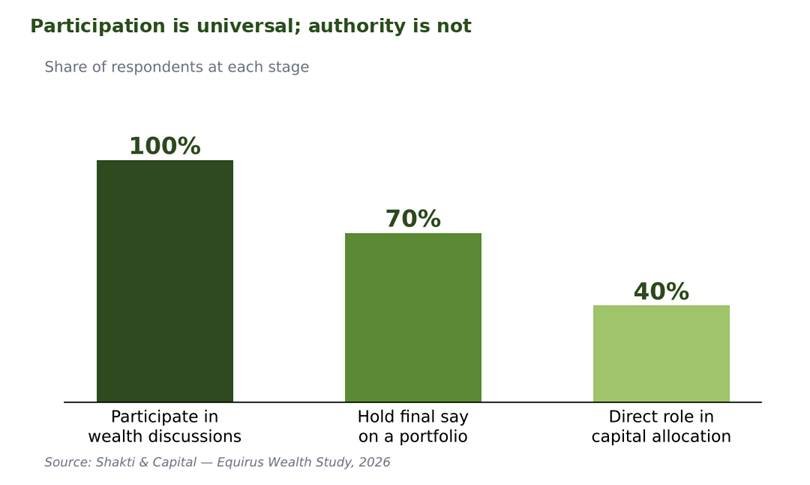
- 100% participate in family wealth discussions, but only 40% are directly involved in capital allocation or investment origination.
- 40% assumed responsibility for wealth decisions following a major life event — bereavement, separation, capital loss or inheritance.
- 30% were introduced to wealth management by family members; another 30% began through their own earnings or employer shares.
- 60% grew up in households that emphasised saving but offered limited investment guidance.
- 50% describe their successors as not yet ready or not yet engaged, while only 30% deliberately prepare the next generation.
- 50% identify independence and peace of mind as the primary purpose of wealth; 30% see it as a platform for the next generation and 20% identify giving.
Wealth responsibility often arrives unexpectedly
The study finds that financial responsibility frequently follows a life event rather than a planned transition. Four in ten respondents entered wealth decision-making after a significant personal or financial development, while three in ten were introduced to it by family members and three in ten began with their own earnings or employer shares.
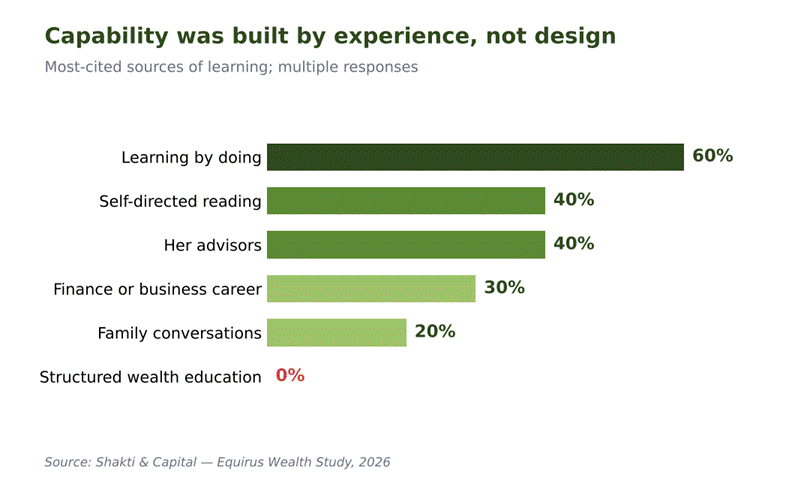
The findings also reveal a gap in financial education within families. Only 20% grew up in homes where money was actively taught. Saving was a recurring lesson, but investment concepts such as compounding and the benefits of starting early were often learnt later through experience — and capability was built largely on the job rather than through any structured pathway.
The study warns that this pattern could repeat across generations. Half the respondents described their successors as not yet ready or not yet engaged, while 70% rely on informal exposure rather than deliberate preparation — raising the risk that successors may have to learn while making consequential financial decisions.
Participation does not always mean investment authority
While all respondents participate in family wealth discussions, direct involvement in capital allocation is far less widespread. The distinction matters: being informed about family assets or consulted on decisions is not the same as having the authority to originate investment ideas, determine position sizes or decide how capital is deployed.
Across the study, 60% report full visibility of family wealth, 30% have partial visibility and 10% rely on delegated access to information. Among respondents who share wealth decisions with a spouse, approximately two-thirds report that their husbands originate major investment decisions — particularly large-ticket and private-market opportunities.
Women investors also differ in how actively they engage with markets and how much authority they hold. The study maps four stewardship profiles, each with distinct advisory needs:
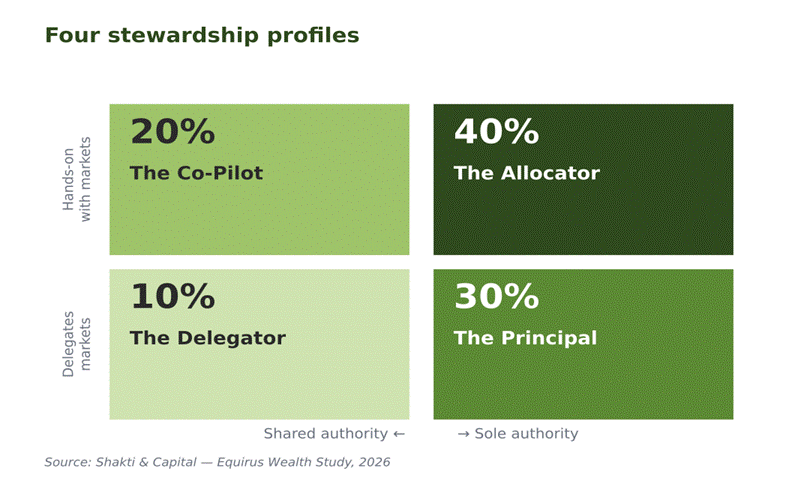
The study calls for clearer decision-making rights, greater visibility of family assets and liabilities, practical investment experience and defined allocation mandates, so that women can progress from participating in discussions to exercising meaningful investment authority.
A generational shift in investment priorities
The study identifies differences in how today’s decision-makers perceive their successors. Younger family members are seen as having greater access to digital platforms, global markets and information, alongside an interest in entrepreneurial ventures and newer asset classes.
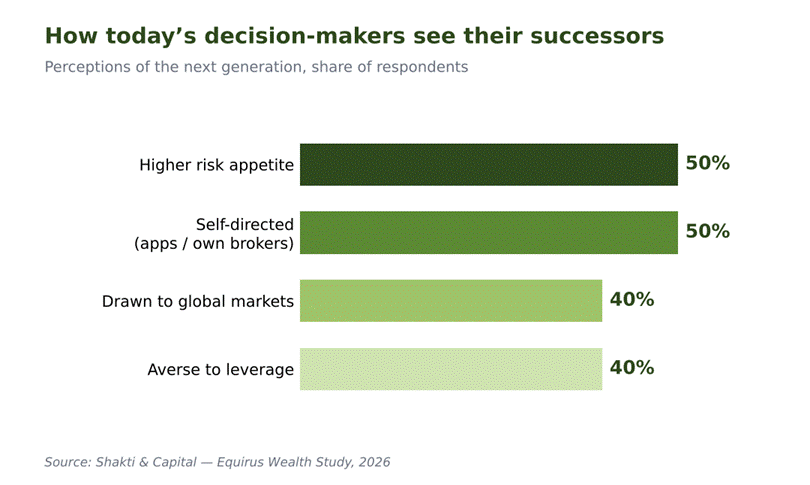
These findings reflect respondents’ perceptions of the next generation rather than direct interviews with successors. The study argues that greater access to investment opportunities must be matched by an understanding of risk, diversification, liquidity and due diligence.
Advisor relationships and succession planning
Trust in a financial advisor is another area of potential discontinuity across generations. Only 20% of respondents expect their successors to retain the family’s existing advisor, while 40% expect the next generation to choose its own; 20% believe their successors may not want an advisor, and the remaining 20% have not yet discussed it.
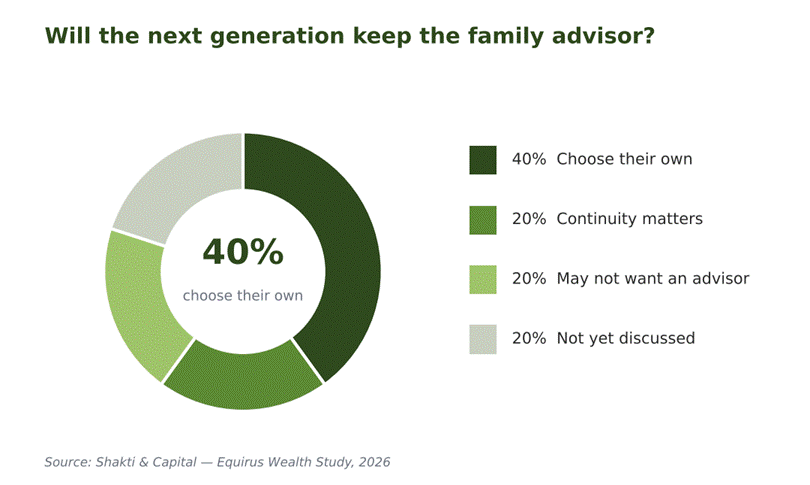
The study argues that advisors must build relationships with the next generation before a succession event, understand their priorities and offer clear, candid advice. It also highlights the need for families to review wills, nominations, ownership structures, tax exposure, liquidity and retirement cash flows as part of an integrated process. On governance, only 10% of respondents reported a formal family vehicle such as a trust, and none described an investment committee or a scheduled portfolio review.
Redefining wealth and legacy
For many respondents, wealth represents independence, security and personal choice, rather than solely assets to pass on. Half identified financial independence and peace of mind as wealth’s primary purpose, while three in ten saw it as a foundation for the next generation and two in ten prioritised philanthropy.
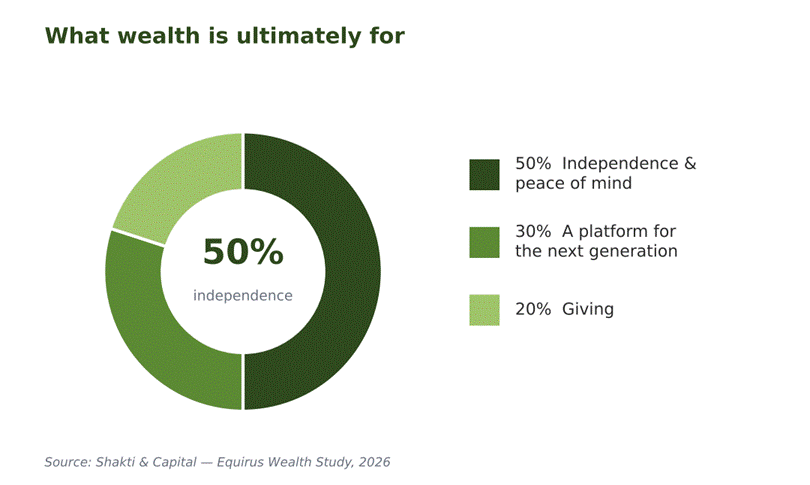
The study recommends that families begin financial conversations well before a transition becomes urgent, give successors supervised investment responsibilities, clarify decision-making authority and review the entire family balance sheet. It also calls for direct engagement between advisors and heirs, so the next generation can develop its own understanding of the family’s wealth.
At its heart, Shakti & Capital makes a case for a more meaningful definition of legacy. True intergenerational prosperity depends not merely on the assets a family passes on, but on preparing the next generation with the knowledge, judgment and independence to steward them.
Because the most enduring inheritance may not be wealth itself, but the ability to shape its future.
Methodology: The study is based on in-depth qualitative interviews with women investors and inheritors served by Equirus Family Office, conducted in September 2026. Figures represent shares of respondents and are not intended to be statistically representative of the wider population.
(Disclaimer: The information provided here is investment advice only. Investing in the markets is subject to risks and please consult your advisor before investing)
(સ્પષ્ટતા: અત્રેથી આપવામાં આવતી તમામ પ્રકારની માહિતી કોઇપણ પ્રકારે રોકાણ/ ટ્રેડીંગ માટેની સલાહ નથી. બજારોમાં રોકાણ જોખમોને આધીન છે અને રોકાણ કરતા પહેલા કૃપા કરીને તમારા સલાહકારની સલાહ લો. વધુમાં અત્રે પ્રગટ થયેલા કોઇપણ સમાચાર કે વિગતો સાથે businessgujarat.in અંશતઃ કે સંપુર્સણપણે સહમત નથી.)