
Indian Equities Emerge as Top Wealth Engine for GCC NRIs: Equirus Wealth Report

Mumbai, 8 May 2026: GCC-based Non-Resident Indians (NRIs) are decisively increasing their exposure to Indian equities while reducing investments in real estate, signalling a structural shift in wealth allocation amidst the ongoing conflict, according to a new report by Equirus Wealth titled “Indian Equity at the Core, Eyes Everywhere.”
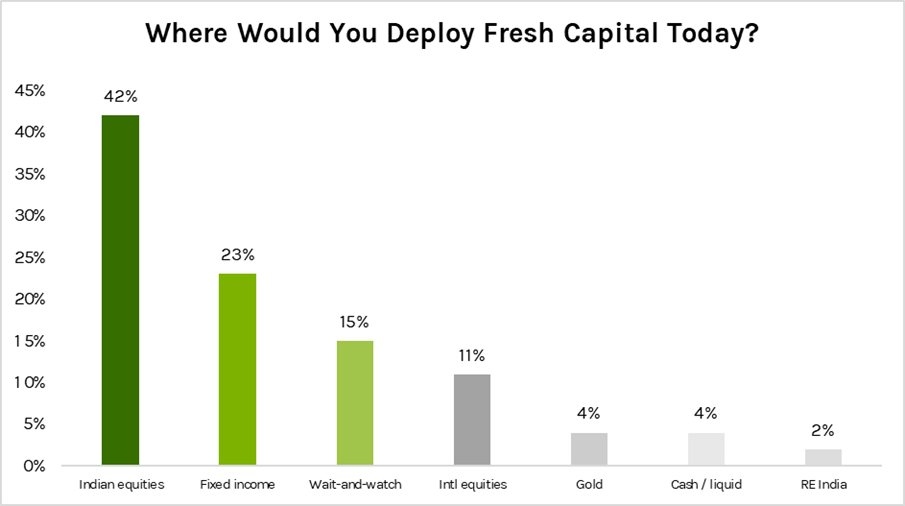
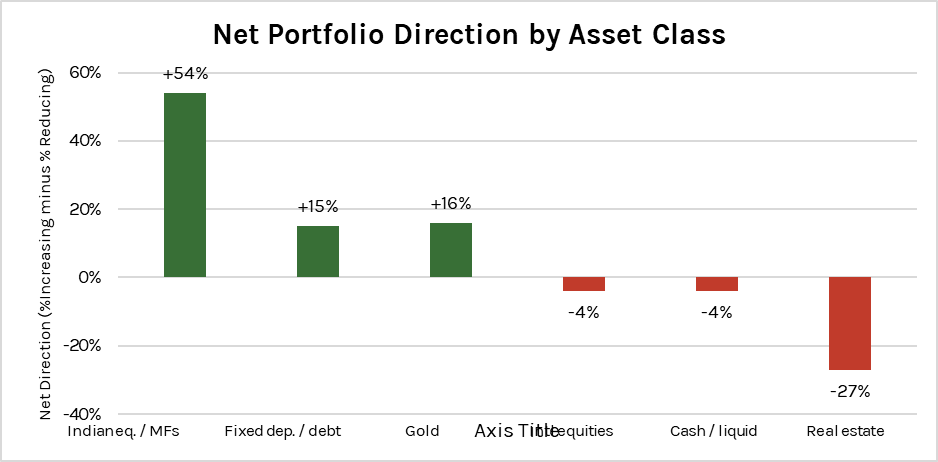
The report, based on structured sentiment pulse across 8,300 GCC-based NRI customers of Equirus Wealth across the UAE, Saudi Arabia, Qatar, Kuwait, Oman, and Bahrain, highlights a clear structural transition from physical assets to financial portfolios, with India emerging as the dominant wealth-creation hub. Indian equities have firmly cemented their position as the core investment asset class, with 73% of respondents increasing exposure and 42% willing to deploy fresh capital into Indian markets—far ahead of any other asset class.
Ankur Punj, Managing Director & Business Head – Equirus Wealth, said: “What we are witnessing is not a short-term reaction to global uncertainty, but a structural evolution in how GCC NRIs approach wealth creation. Investors are becoming more disciplined in behaviour, yet more decisive in allocation — with India firmly at the centre of that strategy. The shift away from real estate towards financial assets, particularly Indian equities, marks a defining transition. At the same time, remittances are no longer driven by obligation — they are increasingly being deployed with clear investment intent and long-term planning.”
In contrast, real estate is witnessing a broad-based exit, with up to 40% of investors reducing exposure, underscoring a long-term reallocation rather than cyclical rebalancing.
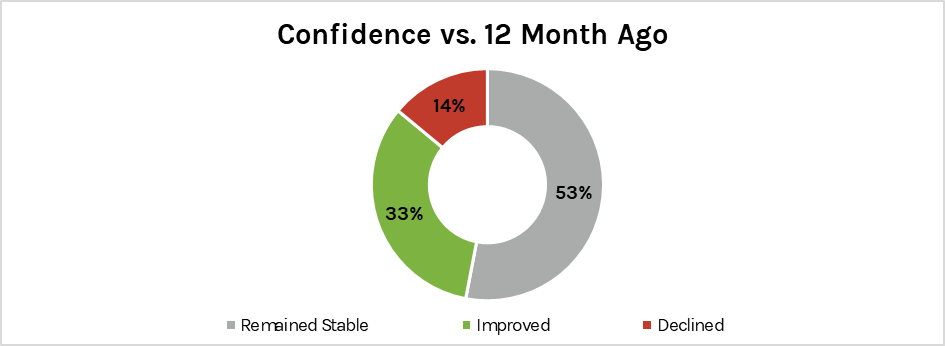
Despite heightened geopolitical tensions and global market volatility, investor sentiment remains resilient. Nearly 86% of respondents reported stable or improved financial confidence, reflecting long-term income visibility and a maturing investment approach. While 83% of investors acknowledge geopolitical risks, their response has been measured and disciplined—characterised by increased savings, controlled spending, and selective portfolio adjustments rather than panic-driven decisions.
Fresh capital deployment among GCC NRIs shows a strong and consistent tilt towards Indian equities, as reflected across multiple indicators rather than a single headline number. While 42% of respondents indicate willingness to deploy fresh capital into Indian equities, broader portfolio data shows an even stronger trend, with over 73% increasing exposure to equities and mutual funds, reinforcing India’s position as the primary wealth engine.
At the same time, investor confidence remains steady, with an average score of 3.5 out of 5 signalling resilience despite global uncertainties. Behaviour across GCC markets also shows nuanced variation—Kuwait leads in confidence levels, followed by the UAE and Qatar, which are near the average, while Saudi Arabia and Oman display more cautious, rebalancing-driven approaches, and Bahrain reflects the lowest confidence in the sample. Together, these trends suggest that while allocation intensity varies across cohorts and geographies, the underlying conviction in Indian equities as a long-term destination for fresh capital remains structurally strong.
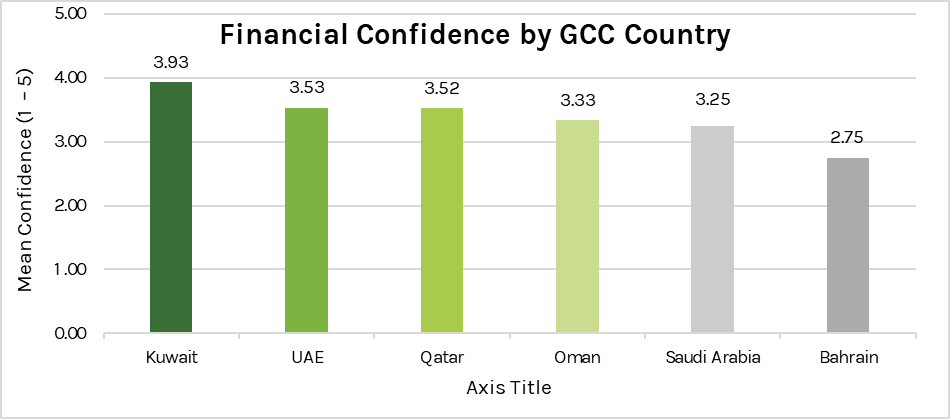
Average financial confidence by GCC country. Kuwait leads at 3.93; Bahrain trails at 2.75. UAE and Qatar cluster near the overall average of 3.50.
Remittances Turn Strategic, Not Sentimental
A defining shift captured in the report is the transformation of remittance behaviour. Traditionally driven by family obligations, remittances are now increasingly aligned with investment goals. Investment (27%) and retirement planning (22%) together account for nearly half of remittance intent, surpassing family support, and positioning India as the central destination for long-term wealth creation. This evolution reflects a deeper financial integration of NRIs with India’s capital markets and long-term economic growth story.
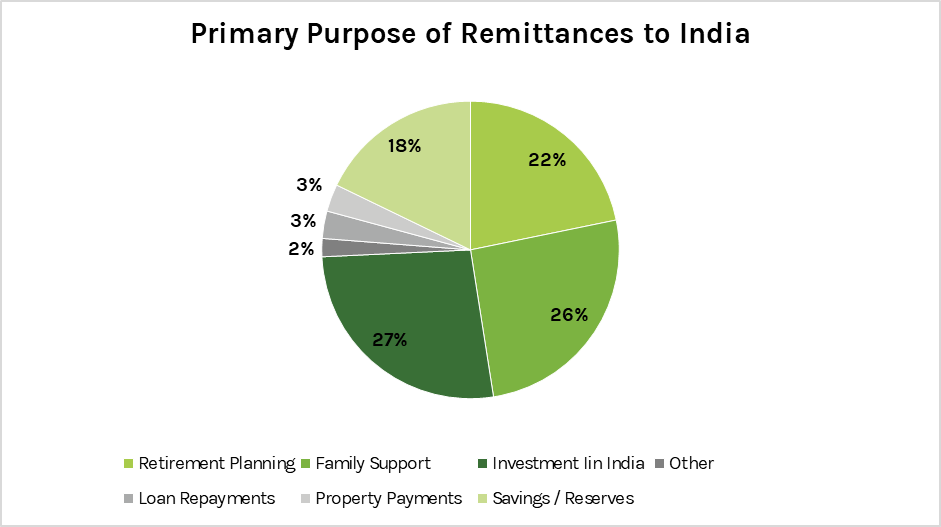
The report also highlights a nuanced investor mindset. While 35% of respondents are increasing savings and 26% are cutting discretionary spending, this defensive behaviour is not translating into risk aversion. Instead, 75% of investors remain actively invested or selectively deploying capital, indicating a forward-looking approach that balances caution with conviction. This combination of behavioural discipline and decisiveness in allocation is emerging as a defining trait of the GCC NRI investor base.

Structural Shifts Defining GCC NRI Investors
The report identifies three clear long-term trends shaping NRI investment behaviour:
- Migration from physical to financial assets, led by strong equity inflows and real estate exits
- India’s emergence as the primary wealth engine, across fresh investments and remittance flows
- Rising financial discipline, with investors becoming more structured, selective, and goal-oriented
About Equirus Wealth: Equirus Wealth is one of India’s fastest-growing wealth management firms, with over ₹35,000 crore in assets under management, among India’s top 10 non-bank wealth managers. Focused on scaling to ₹50,000 crore by 2028. It is a premier wealth management firm in India, specialising in personalised investment solutions for High-Net-Worth Individuals (HNIs) and Ultra HNIs.
(Disclaimer: The information provided here is investment advice only. Investing in the markets is subject to risks and please consult your advisor before investing.)
(સ્પષ્ટતા: અત્રેથી આપવામાં આવતી તમામ પ્રકારની માહિતી કોઇપણ પ્રકારે રોકાણ/ ટ્રેડીંગ માટેની સલાહ નથી. બજારોમાં રોકાણ જોખમોને આધીન છે અને રોકાણ કરતા પહેલા કૃપા કરીને તમારા સલાહકારની સલાહ લો. વધુમાં અત્રે પ્રગટ થયેલા કોઇપણ સમાચાર કે વિગતો સાથે businessgujarat.in અંશતઃ કે સંપુર્સણપણે સહમત નથી.)